Numbers That Tell a Story: How MIS Helps Your Business Grow 

 Your numbers tell a story. Are you using them to guide your next move? 
 
Perhaps you want to expand your business but are unsure where to start. Should you open another location, hire more people, introduce a new service, or strengthen your existing operations first? 
 
Your accounting numbers can help answer these questions, but only when they are organized, accurate, and understood. This is where MIS comes in. 
 
What is MIS? 
 
MIS stands for Management Information System. It brings business information together and turns it into structured reports that help owners understand performance and make informed decisions. 
 
In accounting and finance, MIS reporting connects figures such as sales, expenses, profit, cash flow, and outstanding customer payments. Together, these figures explain where your business stands, what needs attention, and what could support its next stage of growth. 
 
How does MIS help? 
 
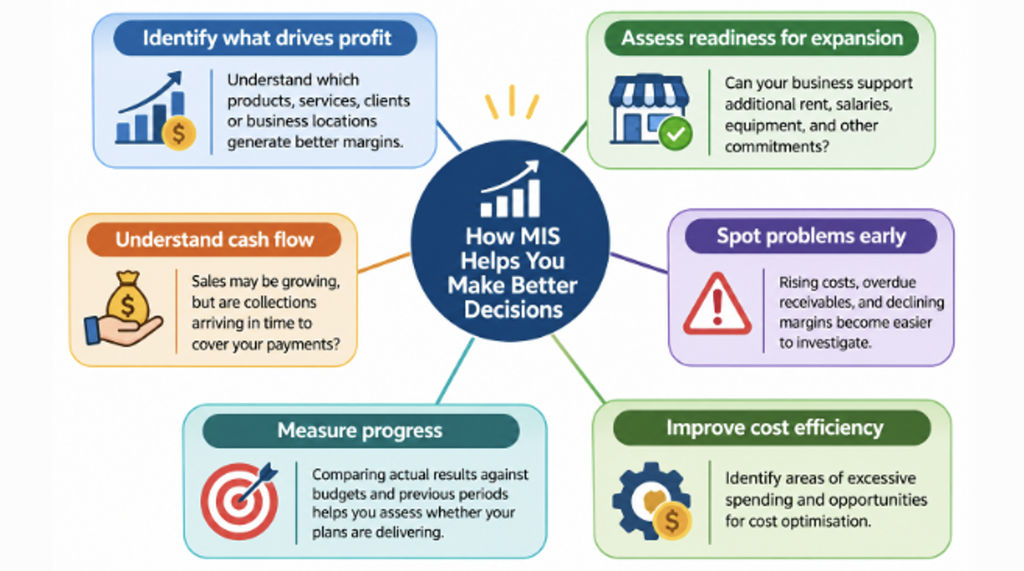
A useful MIS goes beyond showing what happened. It helps management understand what the results mean, identify areas requiring attention and make informed business decisions. A well-prepared MIS provides insights in the following areas:

What happens when the numbers are wrong? 
 
Incorrect or incomplete reporting can make a business appear healthier than it is. Owners may expand too quickly, underestimate expenses, or commit funds needed for daily operations. Repeated decisions based on unreliable information can put the business’s survival at risk. 

For example, Strong sales in the management accounts may encourage a business to open a second branch. However, a comprehensive MIS provides a 360-degree view of financial and operational performance, revealing issues such as low margins or slow customer collections. Addressing these areas and strengthening cash flow should come before taking on additional costs, such as expanding the business. 
 
How MMC helps you see the story 
 
At Mohan Management Consultants, we bring structure and clarity to your financial information through well-organised accounting records and consistent MIS reporting. We connect the various aspects of your business operations with their financial impact, bringing together key financial and operational information to provide a complete, 360-degree view of your business performance. 

By managing your accounting and providing meaningful insights into the numbers, we help you make informed decisions and build a stronger foundation for business planning, growth and expansion. 


Your numbers are decision-making tools. MIS helps you put them to work.  

Article Written by: Vidya Ashish
Is Your 2027 Payroll Budget Ready for the New CPF Rates?

Singapore’s CPF contribution rates will change on 1 January 2027. Have you factored the additional costs into your manpower budget?

As businesses prepare their budgets for the new year, one important adjustment deserves attention: higher CPF contribution rates for eligible senior workers.

While the increase may appear small, it can affect employer payroll costs, employees’ take-home pay, and overall manpower planning.

So, what exactly is changing, and how can your business prepare?

What’s Changing in 2027?

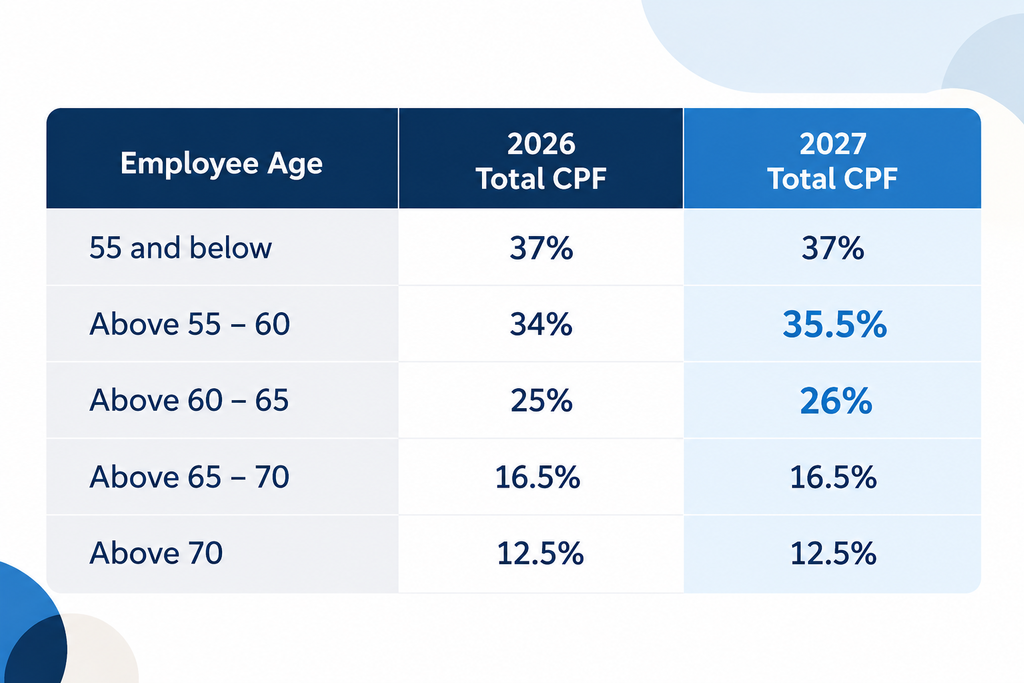
From 1 January 2027, CPF contribution rates will increase for employees aged above 55 to 65, as part of Singapore’s ongoing efforts to strengthen retirement adequacy.

Here’s a quick look at the changes:

Source: CPF Board. Standard rates for Singapore Citizens and third-year-onwards Permanent Residents earning monthly wages above S$750.

A Small Percentage, But What Does It Mean for Your Business?

Consider an eligible employee aged 58 earning S$4,000 monthly.

Under the new rates:

  • S$20 more in monthly employer CPF contributions.
  • S$40 more deducted from the employee’s monthly salary.
  • S$60 more contributed to CPF savings each month.

For a business with several employees in the affected age groups, these adjustments can add up over the year.

The good news? The Government will provide a CPF Transition Offset covering 50% of the increase in employer CPF contributions for eligible employees, helping businesses manage the transition.

Is Your Payroll System Ready?

Beyond adjusting budgets, employers should ensure their payroll processes are prepared for the new rates.

This includes reviewing age-based CPF calculations, updating payroll systems, checking employees approaching the affected age thresholds, and ensuring the correct contribution rates apply to wages earned from January 2027.

Even minor payroll discrepancies can create unnecessary administrative work and compliance risks.

Prepare Today, Stay Compliant Tomorrow

Regulatory changes don’t have to mean additional complexity for your business.

At Mohan Management Consultants (MMC), we help businesses manage payroll, navigate statutory requirements, and stay on top of regulatory developments.

Is your business ready for the 2027 CPF changes?

Connect with MMC to ensure your payroll processes and manpower planning are prepared for the year ahead.

Article Written by: Divya Gomes and Khandalkar Deepti Sunil

Financial Reporting in Singapore Is Changing in 2027. Is Your Business Ready?